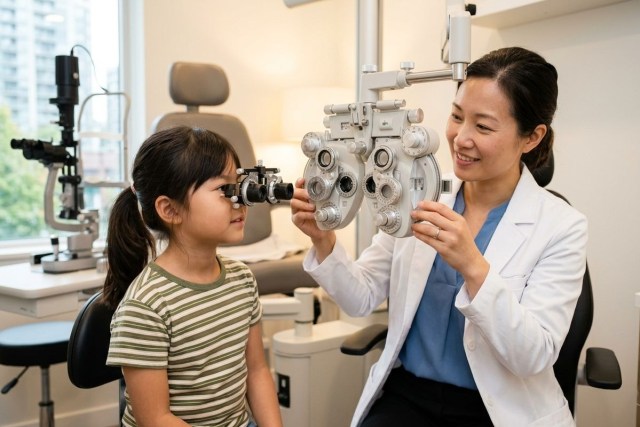
Getting new glasses is a big moment for a kid, and we love being part of it. Once your child’s eye exam shows they need a prescription, the fun part begins: picking out frames.
We fit plenty of kids with glasses, including many who are nearsighted, and the pairs they wear every day tend to have a few things in common. Choose frames that sit just below the eyebrows and match the width of your child’s face, then let your child pick the colour.
Why Comfortable Glasses Matter for Kids
Kids use their eyes for almost everything at school, from copying notes off the board to spotting a friend across the playground. Vision problems can make learning harder, and plenty of children assume everyone sees the world the way they do.
Glasses that pinch or slide around tend to end up at the bottom of a backpack by lunchtime. When a pair feels comfortable, your child can forget they’re wearing it.
Style counts too! Kids who like how they look usually reach for their glasses without a fuss.
How Kids’ Glasses Should Fit

A good fit comes down to a few spots on your child’s face, and we check each one during a fitting.
Start with the width. The frame should line up with the sides of your child’s face without sticking out past them. The top of the frame should sit just below the eyebrows so the lenses cover your child’s whole line of sight.
Try not to buy a bigger pair for your child to grow into. Oversized frames slide down the nose, so your child ends up looking over the lenses or through the edges. Things start to look blurry, and the glasses come off.
Next, look at the nose. Many kids have a low, flat nose bridge that’s still developing. A padded bridge can spread out the weight and help prevent red marks. Adjustable nose pads can keep frames from sliding when your child looks down at a worksheet.
Then check behind the ears. Cable temples curve around the back of each ear and can hold glasses in place through recess and gym class. For toddlers, this small detail can decide whether glasses stay put or land on the floor 12 times a day.
Durable Frame Materials for Kids’ Glasses
Kids drop their glasses and sit on them. Sometimes they manage both in the same afternoon! Lightweight titanium and flexible plastic frames can handle that kind of daily wear and bend back into shape.
Ask about spring hinges, which let the arms flex outward without snapping. If your child has sensitive skin, hypoallergenic frames can help reduce redness and itchiness behind the ears.
Lens Options for Kids’ Glasses
Lenses need to be as tough as the frames. Polycarbonate resists impact, which makes it a safer pick than glass for kids who spend their days running around and occasionally crashing into things.
A few extras can help lenses last longer and feel more comfortable. Ask your optometrist about:
- Scratch-resistant coating that helps lenses hold up to drops and wipes with a T-shirt
- Anti-glare coating that cuts reflections from screens and classroom lights
- UV protection, since children’s eyes are especially sensitive to the sun
- Photochromic lenses that darken outdoors and clear up once your child heads back inside
Extra Features for Active Kids
If your child lives for hockey or soccer, their everyday frames may need backup. Regular glasses don’t protect eyes from impact, and some can even shatter during a hit. Sports goggles fit snugly and can shield your child’s eyes from stray elbows and flying pucks.
A spare pair can help too, especially for kids with strong prescriptions who can’t see much without their glasses. Keep one at home, and your child won’t have to squint through a school day while the main pair gets repaired.
Warranty plans can cover repairs and replacements when accidents happen. Ask our team which plans work with your child’s frames.
How to Help Your Child Get Used to Wearing Glasses
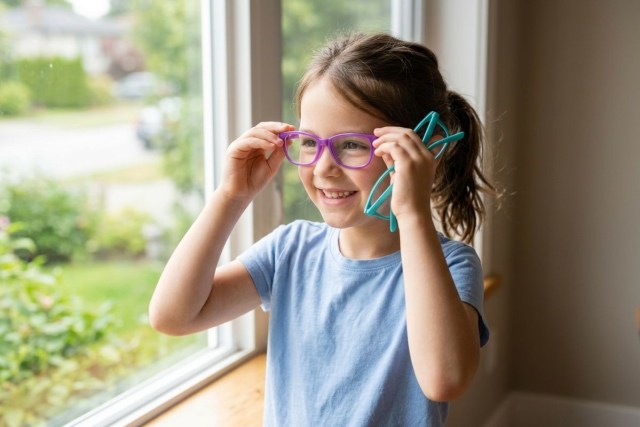
Give your child a say in the colour and shape. Kids who pick their own frames often feel proud to put them on each morning, and a sparkly purple pair or a bold blue one might be exactly what gets them excited.
Your reaction matters, too. Tell them how great they look! A little praise can turn a nervous first-timer into a proud glasses wearer.
Start with short stretches, like an hour of reading or a favourite show, and build up from there. It can take a few days to adjust to a new prescription, so keep things positive and cheer your child on as the hours add up.
Kids grow fast, and a pair that fit well in September might pinch by spring. Bring your child in every few months so we can adjust the frames and keep them sitting where they should.
Finding Frames Your Kid Will Want to Wear
We love watching kids light up when they find a pair that feels like theirs. The optometrists and opticians at Eyelab can match frames and lenses to your child’s prescription and personality, with plenty of patience for try-ons along the way.
Request an appointment and bring your little one in to try on a few favourites. We’ll help them find glasses they’re excited to wear.